Platform
AudienceRx is healthcare-native advertising infrastructure, not a generic stack with a health skin on it. Five things happen inside it: HCP inventory gets monetized, identity gets resolved into a usable audience, delivery gets attributed back to the individual provider, targets get defined in plain language and compiled into logic automatically, and all of it runs under your own brand and domain.
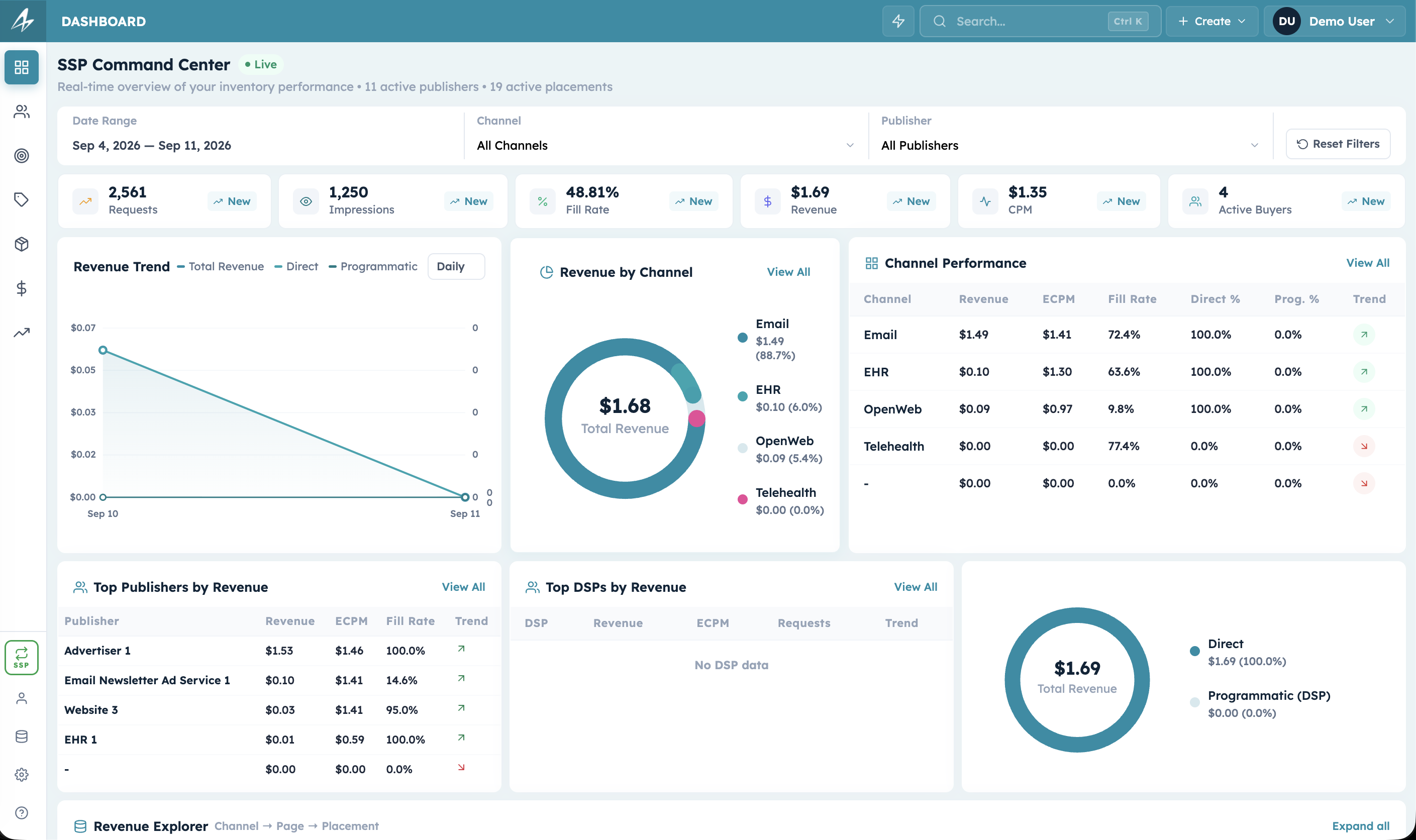
Publisher Manager — HCP inventory monetization
Publisher Manager connects demand and runs a multi-channel auction on your HCP-qualified inventory, point-of-care and EHR placements included. Deals run as open programmatic, private marketplace, or direct guaranteed placements, in whatever mix fits your supply, while you keep the margin, the data, and the client relationship instead of renting someone else’s trade desk and paying a markup to see your own results.
HCP identity resolution and audience onboarding
Raw audience inputs are resolved into NPI (National Provider Identifier)-level audiences, delivered as a bring-your-own-data (BYOD) file or through a direct CDP connection. This is the actual asset: audience infrastructure, not a byproduct of running campaigns.
Integrations
The platform connects through standard programmatic protocols and interfaces.
- OpenRTB
- Prebid.js and Prebid Server
- Header bidding, tag-based, and server-side delivery
- Deal IDs, private marketplaces, and direct guaranteed placements
- VAST and DAAST for video
- Server-to-server postbacks
- Audience onboarding via bring-your-own-data file or direct CDP connection
- Log-level delivery export as a custom feed
- API access for campaign and reporting workflows
Named integrations are covered in the conversation, matched to the stack you already run.
NPI-level attribution (PLD)
Delivery resolves to the individual provider, not a segment or a household. This is the level of attribution pharma brands buy directly, and one a publisher or data owner can’t produce on their own. It ships as a custom feed, shaped to each client’s schema, fields, and cadence, and it’s yours to forward under your own brand, not a fixed report format.
Rules Engine — plain-language targeting
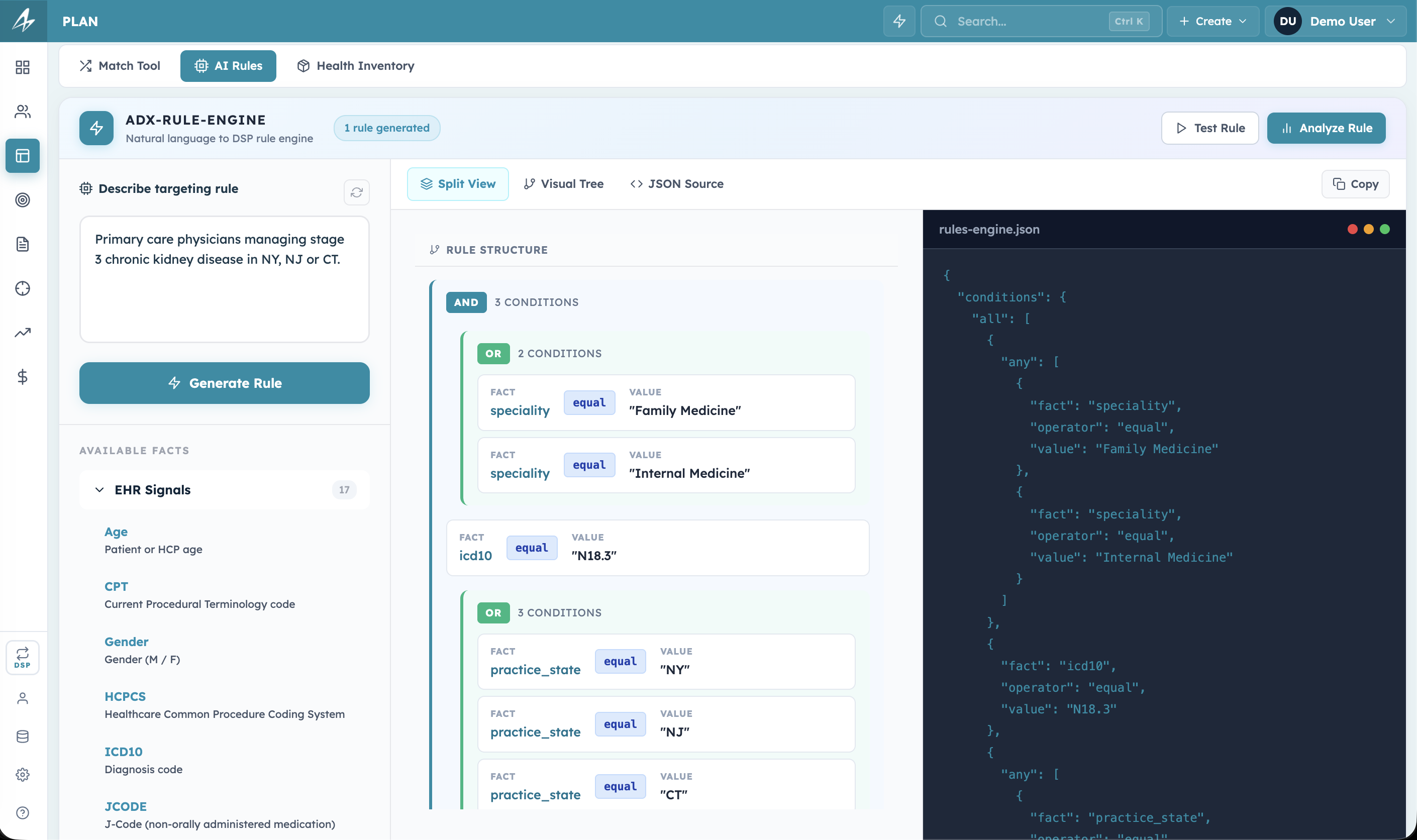
Describe a target in plain language: a specialty, a treatment stage, a geography, a combination of clinical and behavioral signal. The Rules Engine compiles it into executable targeting logic. There’s no manual query syntax to learn.
Rules run against structured, NPI-level data combined with clinical signal such as ICD-10 diagnosis and NDC drug codes, so a plain-language description of a target compiles into logic against the same data pharma and publishers already think in.
That NPI-level data comes from two places: first-party data uploaded via BYOD or connected through a database or CDP, or third-party data sourced from AudienceRx’s marketplace data providers.
Before spend commits, the Rules Engine forecasts reach against the rule as written and validates it: a check the platform runs before a campaign goes live, not after.
White-label operation
White-label isn’t a feature at the bottom of the platform page — it’s the position. The platform runs under your brand and your domain, not ours. Audience, client relationship, and revenue stay with you instead of moving through someone else’s platform.
Operating it is real, ongoing work. Your team runs it directly, day to day, not just during onboarding.
Prefer not to run the day-to-day yourself? Managed Ad Ops puts our team on the operational work. You keep the platform, the data, and the client relationship; we just run it.
Running it under your brand today doesn’t have to be as far as this goes. A contractual right to purchase the underlying source code exists from day one, for clients who eventually want to hold the infrastructure outright rather than license it indefinitely.
What onboarding actually looks like, from configuration to live, is laid out on Engage.
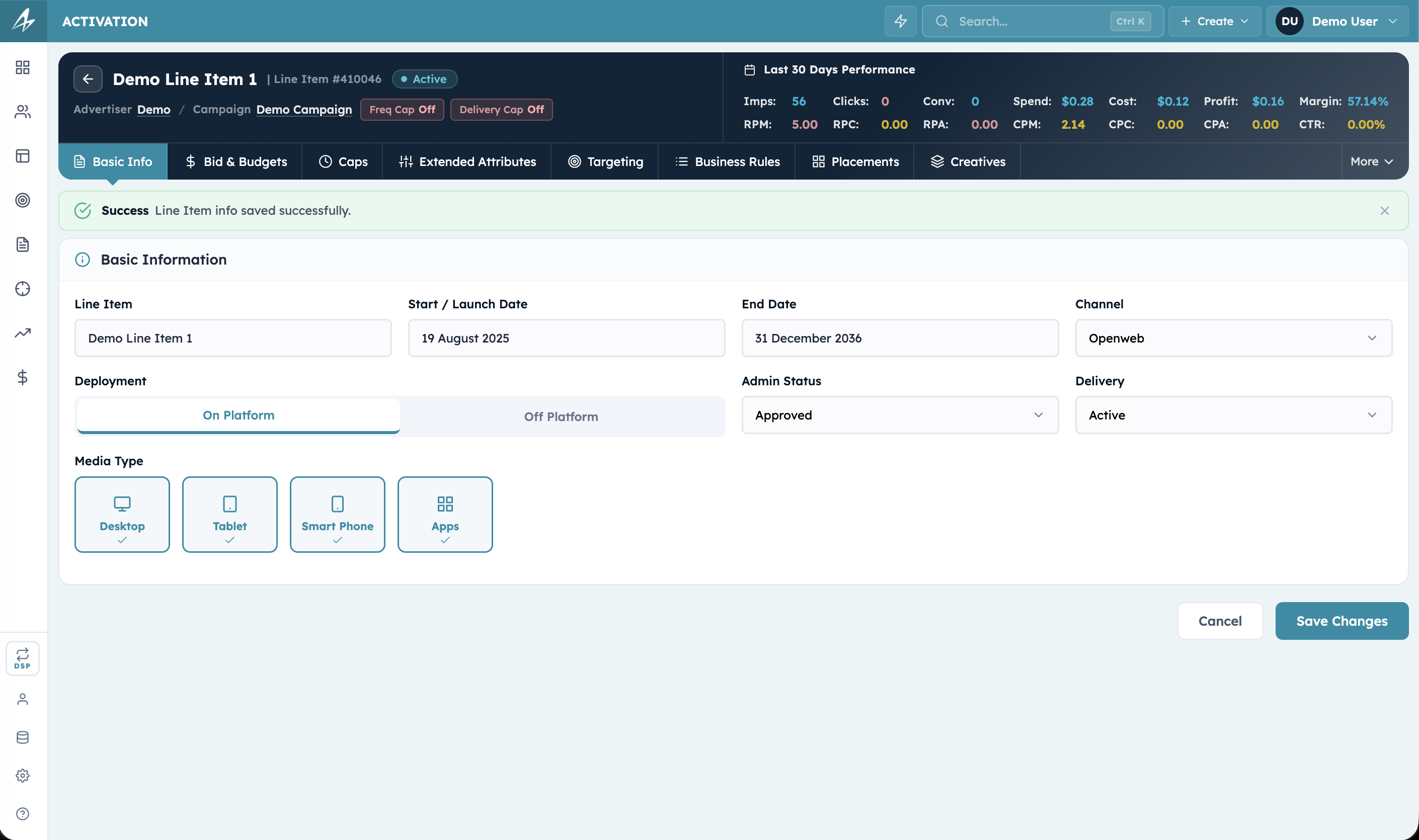
Also available: Self-Serve Campaign Builder, Preflight QA Validator, Reach & Scale Estimator, and a full analytics suite.
Book an intro call